Dad,

I have thought about you from time to time over the last 20 years though I confess that I have put some effort into not doing so.

In the past, my thoughts have always followed the same course: I draw up an indictment. The accusations have been held and turned in my hand for so many years that they have worn smooth. They lie polished and comfortable in my palm as I close my fingers over them. It’s as much as I can do not to run through the whole charge sheet now. Let me pick one. Do you remember when I was four or five I wandered into the neighbouring field where older boys were trying to start a fire? I scared you so you scared me. You climbed the stairs shouting, enraged, dangling me by my wrist and kicking me as we headed to my bedroom. I was released at dinner time and made to eat dinner naked to “teach me a lesson”.

Because the indictment is forever in draft, I have never heard your defence. If you had a barrister he would tell the court that you are a product of your own parenting and education: your father the headmaster, your time boarding at school or as a cadet on HMS Conway – so much discipline. I accept the force of the argument.

If you represented yourself your theme would more likely be exculpatory self-justification. Hasn’t it all turned out alright? Haven’t I done well enough? Weren’t all those lessons you taught me ultimately valuable ones? I have to say that I am not sure that the lessons I learned were those you intended to teach me. I cannot bear to have people stood behind me as I eat. I cannot believe that anyone, even P, is sincere when they say they love me and when a girl I once cared for first raised a hand to touch my face I flinched. I know you would despise that weakness and one lesson you certainly taught me was to despise myself.

When H called me, she said she had news but wasn’t sure how I would react. She said you have cancer. I gather it is in your bowel, your lung and your liver.

H was concerned I would be pleased. She worried that I would see this as you getting what you deserve. That is not how I feel at all. No-one deserves what you will be going through.

I did not feel happy; I felt nothing. That, I am afraid, is what you deserve – I stopped caring. Don’t misunderstand, I have no animus; I am not angry with you; I do not hate you. I have, I suppose, forgiven you. So let me say, not as son to father but man to man, I hope the treatment goes well. I hope you are spared the suffering and the indignity and I hope you find peace. I am sorry.
Average Rating: 4.6 out of 5 based on 225 user reviews.

At 16 I lay awake worriedly asking myself: “Does my ideal woman exist? What if I never meet her?”

At 25, having limped from a broken relationship, I lay awake asking myself: “How can anyone love one person for the whole of their lives?”

Tonight, with P away and scratchy with loneliness, I ask myself: “How could I live without her?”

After so many years, finally the right question.

Average Rating: 4.7 out of 5 based on 188 user reviews.

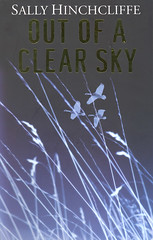
Out of a Clear Sky

At school I was a member of a swotty group of adolescents who fancied themselves to be “writers in the making”. We filled our diaries with angst-drenched poetry and feeble short stories and hoped we were honing a genius that would only be recognised once we’d left school behind and made our way to university and to freedom.

We were encouraged by our English teachers, I now suspect, for their amusement. One afternoon, handing back another pile of arch mediocrity, Mr Gurney told us about a piece of creative writing that had been produced by one of his 15 year old students. It was, unpromisingly, about a man alone at sea on a raft. It was easy enough, Mr Gurney told us, to outrage a readership and scarcely harder to amuse them, but reading the boy’s story he had felt frightened. To have enough talent to grip a reader’s imagination in that way was a precious and formidable thing. I don’t know what my fellow junior pseuds felt, but I realised the game was up for me. I couldn’t see how it could be done.

“Out of a Clear Sky” scared me.

Birds and birdwatching provide the book’s thematic unity, doing a triple duty. First, and most prosaically, it provides the framework for the plot itself. The events play out in early morning mists, on remote coastlines, in campsites, bothies and hides all vividly evoked. The obsession that characterises the twitchers, compelling them to pursue the birds that fascinate them, slips, in this story, into obsessive love and a pursuit of different and darker kind. Observations of bird behaviour resonate in the actions of the human characters, working as a sort of psychological shorthand – a dazzling metaphorical trick that, handled with anything less than Sally Hinchliffe‘s deftness, might have clunked and annoyed. Finally, the birds are a source of simile. That again is brave. An accumulation of avian similes could easily have proved tiresome – too much salt in the dish – but it is done with such subtlety that instead it delights.

The book is supposedly a thriller, which is not a genre I have much experience of – more fool me. It is also Sally’s debut novel and for a first book it astonishingly assured: It is meticulously plotted and gathers pace like an 800 metre runner.

However, its real strengths lie elsewhere. The novel deals with three kinds of death. The first is the sudden and violent extinction of a human life. On the first page, the protagonist, Manda Brooks, is contemplating the dead body of David, the man who has stalked her. It is that death that determines the bookshop shelf upon which the novel will sit but it certainly does not define the book itself.

The first part of the book deals with the death of Manda’s relationship with the feckless Gareth. A discovered infidelity arrives like a diagnosis of a cancer; their attachment dying suddenly having ailed invisibly until past the point where any cure can be contemplated. She deals so well with the involuntary bitterness and the mess of anger, shame and loss that grief for a lost love leaves behind that I found myself resenting the insistence of the plot which I knew would draw my eye away.

The third death is that of her family. Like a death from old age, it is characterised by a steady decline, a loss of faculty and the gathering realisation that things no longer work as they should and that matters can only get worse. Again, this is handled with a steady eye and conviction that itself convinces.

Given that the book is about people given to patient and minute observation, it is hardly surprising that Sally writes so well about them. She is the author of an immensely popular blog. All the best bloggers are miniaturists. More than once a description of a place, an interaction or an event is painted with such care that it catches the breath. Descriptions of Manda’s childhood in Africa and her realisation that she will find no friends in boarding school stand out. However, a better example still is a short passage describing Manda and her sister Zannah trimming an artificial Christmas tree. Like a Holbein painting you cannot imagine it is not drawn from life. If it is the product of imagination alone then that is a still more formidably impressive a feat.

Average Rating: 4.6 out of 5 based on 223 user reviews.